
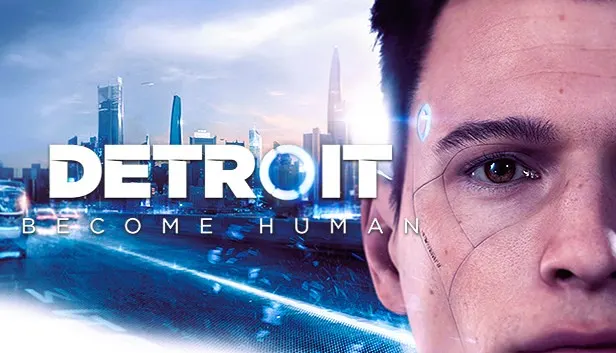
Welcome to MovieAnimeX! Some games are remembered for their gameplay, others for their graphics. Then there are games that leave players questioning their own beliefs long after the credits roll. Detroit: Become Human is one of those rare experiences.
Released in 2018 by Quantic Dream, the game quickly became one of the most talked-about narrative adventures ever created. Its cinematic storytelling, branching narrative, and meaningful player choices earned widespread praise, but those elements alone aren’t why people still discuss it years later. What truly sets Detroit: Become Human apart is its ability to turn a science-fiction story into a deeply human one.
As artificial intelligence becomes a bigger part of our everyday lives, the questions raised by the game feel more relevant than ever. Not because it predicted the future, but because it explored timeless ideas about freedom, prejudice, responsibility, and the consequences of our choices. It reminds us that while technology continues to evolve, human nature often remains the same.
In this review and analysis, we’ll explore why Detroit: Become Human continues to stand among gaming’s greatest narrative experiences, how it became a defining milestone for interactive storytelling, and why its message extends far beyond the world of video games.
Table of Contents
What Is Detroit: Become Human?
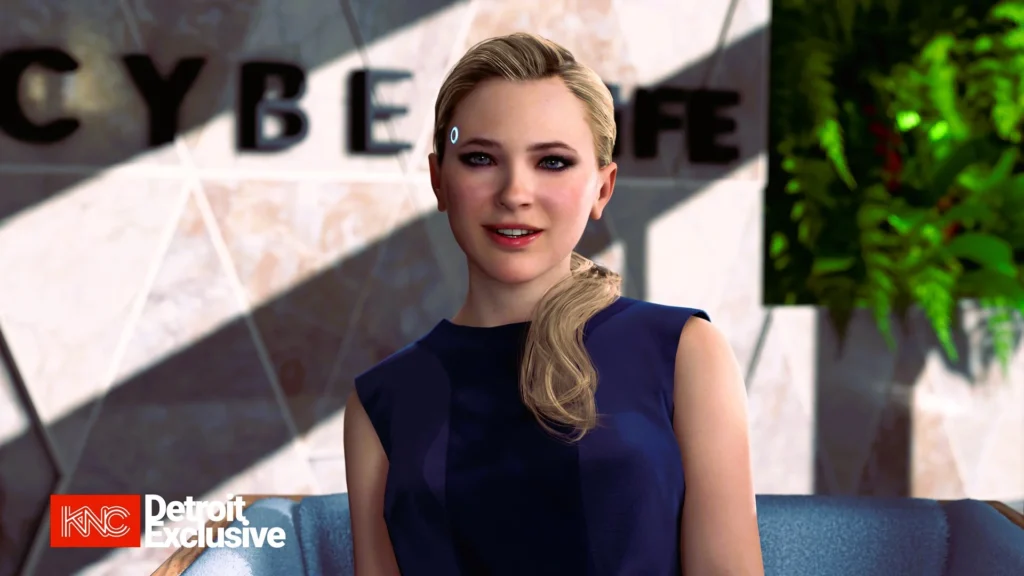
At its core, Detroit: Become Human is an interactive narrative adventure where every decision has the potential to change the story. Set in Detroit during the year 2038, it imagines a future in which highly advanced androids have become an essential part of society. They work in homes, hospitals, factories, and even police departments, carrying out tasks with perfect efficiency while being treated as nothing more than machines.
However, everything changes when some androids begin developing free will. They question orders, make emotional decisions, and search for a purpose beyond the roles humans created for them. Society labels these androids as deviants, turning what appears to be a technological problem into a conflict that challenges morality, justice, and identity.
The story unfolds through three protagonists—Connor, Markus, and Kara—each offering a unique perspective on the growing crisis. Rather than presenting a simple battle between humans and androids, the game explores multiple sides of the conflict, allowing players to decide how each character responds to the world around them.
This is what makes Detroit: Become Human so compelling. It’s not a game about finding the “right” ending. It’s about living with the consequences of your decisions and discovering how those choices shape both the story and the person making them.
A Future That No Longer Feels Like Science Fiction
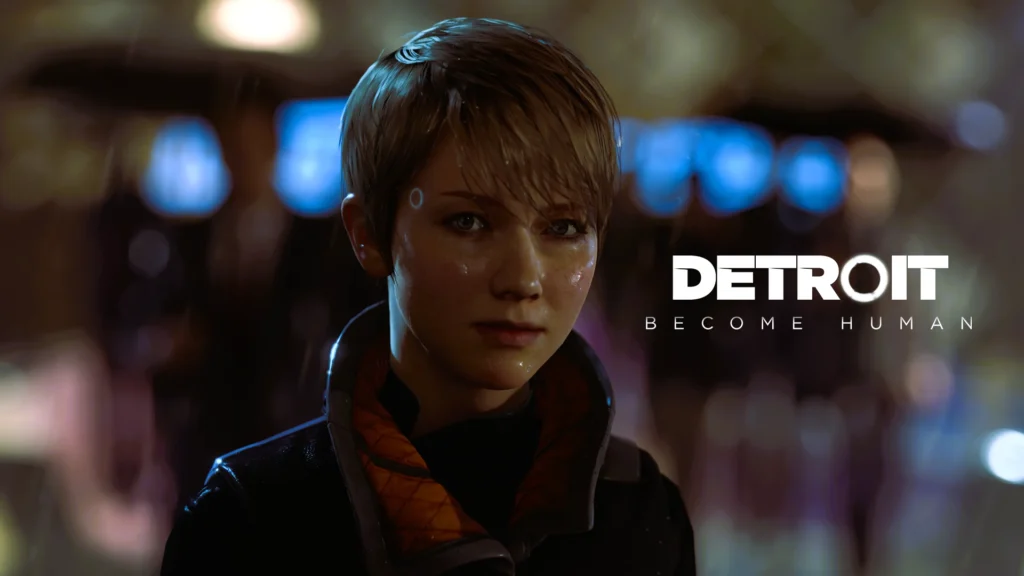
When Detroit: Become Human launched in 2018, artificial intelligence was already making progress, but for most people it still felt like a distant concept. Today, the conversation has changed dramatically. AI can help write articles, generate images, assist programmers, support medical research, translate languages, and even hold conversations that feel surprisingly natural. While we’re still far from creating androids like Connor, Markus, or Kara, the gap between science fiction and reality doesn’t feel as wide as it once did.
That’s one of the biggest reasons Detroit: Become Human continues to resonate. The game didn’t predict the future with perfect accuracy, nor was it trying to. Instead, it explored questions that become more relevant every year. How much responsibility should we give intelligent machines? If an artificial being could think independently, should it have rights? And perhaps the most difficult question of all—how would humanity react?
Rather than focusing solely on technology, the game examines how humans respond to change. History has repeatedly shown that fear, prejudice, and misunderstanding often accompany anything unfamiliar. Detroit: Become Human uses androids as a fictional example, but the emotions surrounding them are deeply human and instantly recognizable.
That is why the world of Detroit feels believable. It’s not because every piece of technology seems realistic—it’s because the people do. Their hopes, fears, ambitions, and flaws mirror our own, making the game’s future feel less like fantasy and more like a possibility worth thinking about.
Connor, Markus & Kara — Three Different Perspectives of Humanity
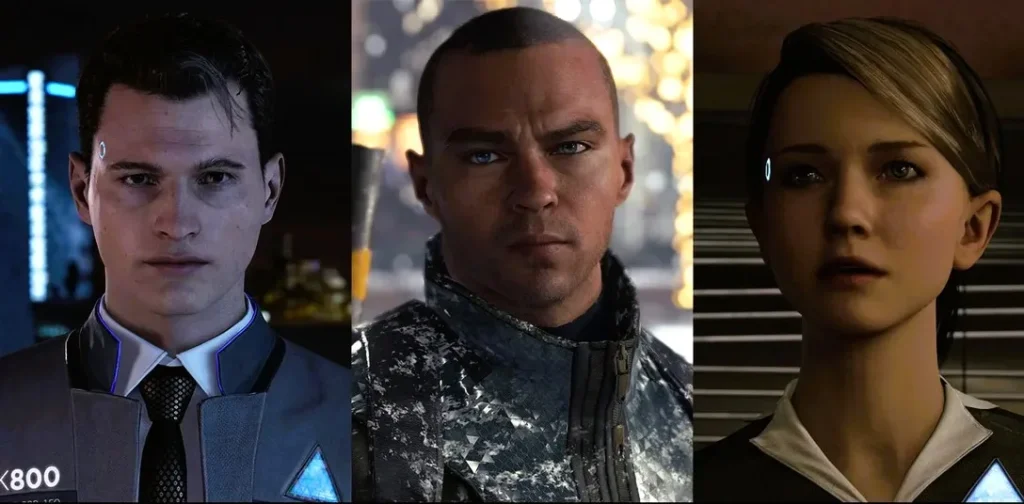
One of Detroit: Become Human‘s greatest strengths is that it doesn’t tell its story through a single protagonist. Instead, it follows three androids whose journeys explore different aspects of humanity, allowing players to experience the same world from completely different perspectives.
Connor is an investigative prototype created to hunt down deviant androids. Logical, disciplined, and highly efficient, he begins his journey believing that following orders is all that matters. As the story unfolds, however, Connor constantly faces situations where logic alone isn’t enough. His journey raises an important question: can someone created to obey learn empathy, or does true humanity come from the freedom to choose?
Markus represents freedom and leadership. What starts as the life of a caretaker gradually transforms into a fight for equality, forcing players to decide what kind of leader he should become. Will he seek peace through dialogue, or believe that revolution demands sacrifice? Markus’ story isn’t just about changing the future of androids—it’s about exploring how change is achieved in the first place.
Kara, on the other hand, tells the most personal story in the game. Rather than focusing on investigations or revolution, her journey revolves around compassion, protection, and family. Through Kara, the game reminds players that acts of kindness can be just as powerful as acts of defiance. Her story proves that sometimes the strongest form of courage isn’t fighting an enemy—it’s protecting someone you love.
Although their goals are different, Connor, Markus, and Kara share one common thread. Each begins life as a machine designed to serve humans, yet each slowly discovers something beyond programming. Through their experiences, the game explores justice, identity, hope, sacrifice, and freedom from three unique perspectives, encouraging players to decide not only who these characters become, but also what those choices reveal about themselves.
Every Choice Has Consequences
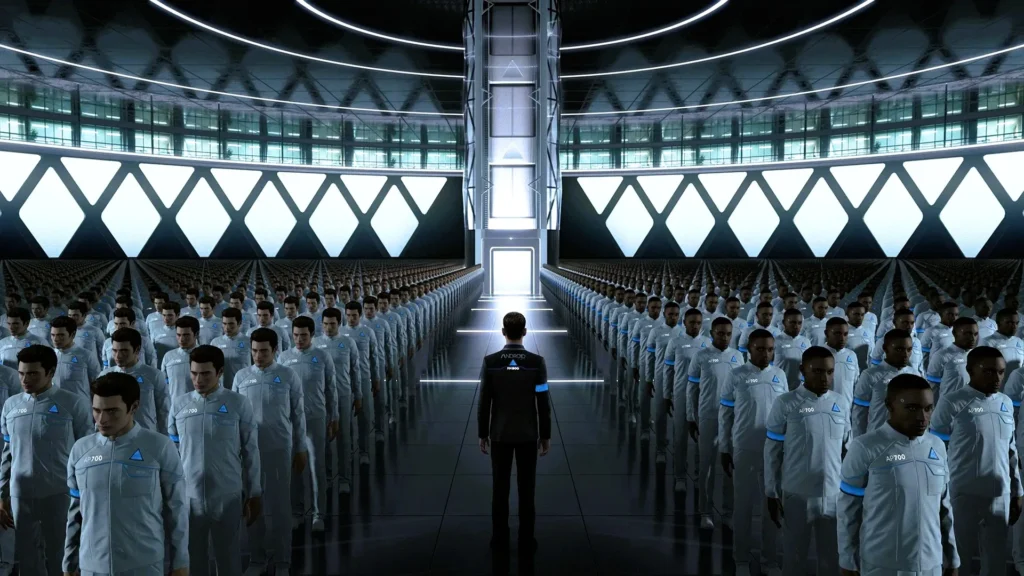
If there’s one feature that defines Detroit: Become Human, it’s the weight behind every decision. Unlike many games where choices lead to minor dialogue changes before the story returns to the same path, Detroit embraces the butterfly effect. A single conversation, a moment of hesitation, or an act of compassion can influence relationships, unlock entirely new storylines, or permanently change a character’s fate.
Quantic Dream reinforces this through its flowchart system, allowing players to see how many different paths each chapter contains. Instead of revealing the “best” route, it highlights how many possibilities existed beyond the choices you made. It’s a simple feature, but one that encourages reflection rather than regret.
More importantly, the game refuses to label your decisions as right or wrong. Every choice comes with benefits, sacrifices, and consequences that often aren’t immediately obvious. Choosing peace may save lives but risk losing support. Responding with violence may achieve short-term goals while creating even greater conflict later. The game rarely offers easy answers because real life rarely does.
This design transforms every playthrough into a personal experience. Two players can finish Detroit: Become Human with completely different stories, different relationships, and different endings, yet both journeys feel equally valid. That’s a remarkable achievement in interactive storytelling.
But the greatest consequence isn’t always found on the screen.
It’s the feeling that stays with you after making a difficult decision—wondering if another choice might have changed everything.
The Choices That Define Us — The Real Question Isn’t About Androids
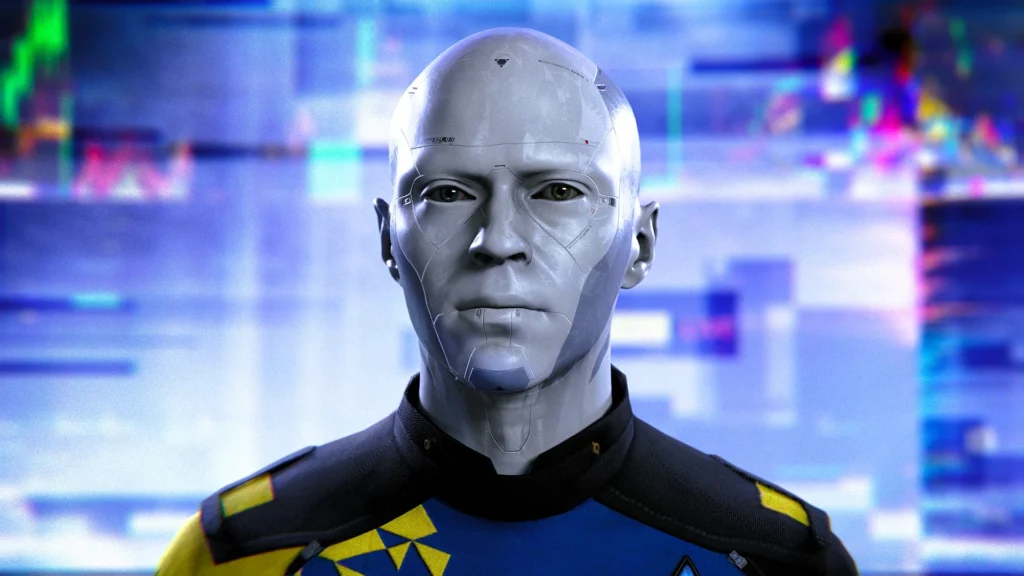
At first glance, Detroit: Become Human appears to ask a simple question: Can machines become human?
But as the story unfolds, it becomes clear that this isn’t the question the game is truly interested in answering.
Instead, it quietly asks something far more personal:
What does it actually mean to be human?
Throughout the game, players are constantly placed in morally complex situations. Should you forgive someone who has caused harm, or seek revenge? Is violence ever justified if it leads to freedom? Do you follow orders because they’re expected, or challenge them because they’re wrong? The game never tells you which path is correct. Instead, it asks you to make the decision and accept whatever follows.
This is where Detroit: Become Human becomes much more than a science-fiction story. The androids aren’t simply characters; they’re a narrative device that reflects our own values back at us. Connor, Markus, and Kara don’t define the morality of the story—the player does.
One person may guide Markus toward peaceful resistance, believing lasting change comes through compassion. Another may choose revolution, convinced that freedom is never granted willingly. Neither decision exists in a vacuum, and both force players to consider the cost of their beliefs.
The same applies to Connor’s struggle between duty and empathy, or Kara’s willingness to risk everything for someone she loves. Their journeys become meaningful because they aren’t driven by predetermined personalities—they’re shaped by the choices players make along the way.
This is why the game continues to resonate years later. It doesn’t simply ask players to control characters; it asks them to confront their own principles. Every important decision becomes a reflection of empathy, fear, trust, hope, or responsibility.
Perhaps that’s Detroit: Become Human‘s greatest achievement.
It never tries to tell us what the “right” choice is.
It simply reminds us that every choice reveals something about the person making it.
AI and Humanity — Why Detroit Feels More Relevant Than Ever

When Detroit: Become Human was released, its world felt futuristic. Today, parts of that future feel much closer.
Artificial intelligence is now part of everyday life. It helps people write, learn, create, solve problems, and automate tasks that once required human effort. Companies are investing heavily in robotics, autonomous systems, and more advanced AI models. We are still far from creating conscious androids like the ones in the game, but we are already living alongside intelligent technology.
That is why Detroit: Become Human feels more relevant every year.
The game is not really warning us that androids will take over the world. Instead, it asks the ethical questions that come before that future arrives. How much trust should we place in AI? Who is responsible when intelligent systems make decisions? If machines become more capable, how do we make sure technology serves humanity instead of replacing the values that define it?
Rather than giving clear answers, Detroit leaves those questions open. It reminds us that every technological breakthrough brings new responsibilities, and that progress should be guided by ethics as much as innovation.
Perhaps that is the game’s most lasting message.
The future will not be defined only by how intelligent machines become.
It will also be defined by how wisely humans choose to use them.
Why Detroit: Become Human Still Resonates Years Later

Very few games stay part of the conversation years after release. Even fewer continue attracting new players who already know the story’s reputation. Detroit: Become Human has done both.
A big part of its appeal is replay value. With branching paths and multiple endings, choices can lead to very different outcomes. Players often return not because they missed something, but because they want to see how different decisions change the story.
Its influence can also be seen in the rise of cinematic, choice-driven storytelling. Narrative games existed long before Detroit: Become Human, but after 2018, more AAA titles began placing greater emphasis on realistic performances, player agency, cinematic presentation, and emotionally driven stories. Detroit did not invent these ideas, but it became one of the clearest symbols of where modern narrative gaming was heading. It showed that a blockbuster game did not need nonstop action to leave a lasting impact—sometimes, one difficult decision could be more memorable than an entire boss fight.
More importantly, the game has aged well because its core themes are not tied to technology alone. Remove the futuristic setting, and the story is still about discrimination, identity, freedom, compassion, fear, and hope. These are timeless ideas, which is why players from different backgrounds continue to connect with the game.
That is also why discussions around Detroit: Become Human never really end. Some people debate the best ending. Others argue over Connor, Markus, or Kara. Many simply return to see how one different choice changes everything.
In the end, the game does more than tell a memorable story.
It starts meaningful conversations.
Conclusion — The Game That Made Us Question Humanity
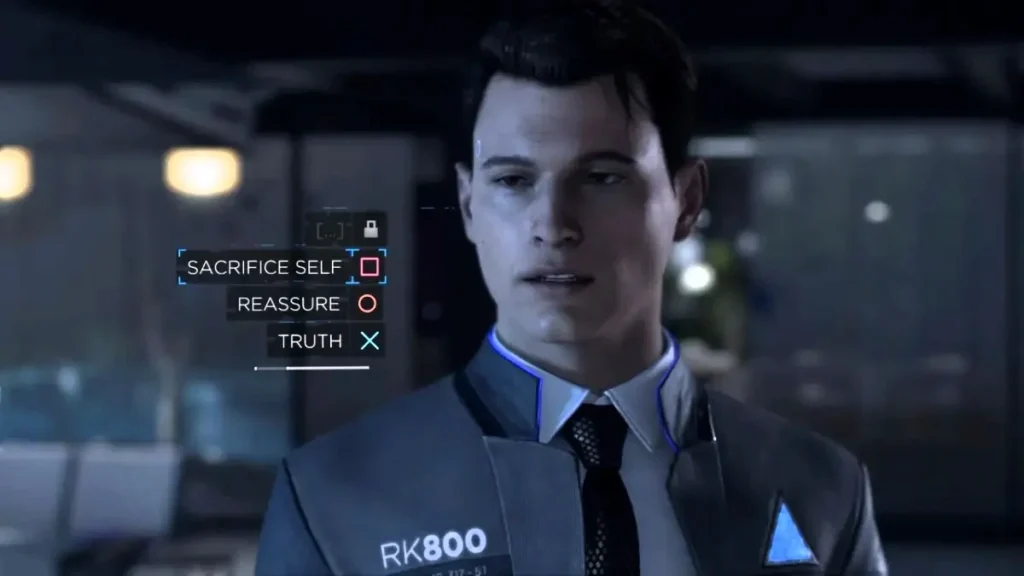
Detroit: Become Human begins with a world divided by humans and androids, but it never keeps that conflict simple. As the story unfolds, the lines between creator and creation, logic and emotion, duty and freedom become blurred, leaving players to decide not only what happens next, but what those choices say about themselves.
Its greatest strength is not just its graphics, motion capture, or branching narrative—impressive as they are. It is the way the game turns player choice into self-reflection. Every major decision carries emotional weight because there are rarely perfect outcomes, only consequences.
As artificial intelligence continues to evolve, Detroit: Become Human feels less like a prediction and more like a conversation we were invited to have before the future arrived. It reminds us that technology alone will never define tomorrow. The values, empathy, and responsibility of the people creating and using that technology will matter just as much.
In the end, the game’s biggest question was never whether machines could become human.
It was whether humanity could keep choosing compassion, understanding, and hope when faced with something entirely new.
And that is why, years after its release, Detroit: Become Human remains more than just an outstanding video game.
It remains one of gaming’s most unforgettable conversations about what it truly means to be human.



1 Comment
Comments are closed.