Welcome To MovieAnimeX ! Few anime series manage to balance storytelling, emotion, philosophy, action, and character growth as flawlessly as Fullmetal Alchemist: Brotherhood (2009). Even years after its release, it continues to dominate anime discussions, recommendation lists, and top-ranking charts worldwide. But what truly makes FMA: Brotherhood a perfect anime? And how does it stand alongside its earlier sibling, Fullmetal Alchemist (2003)?
This article breaks it all down in an easy—whether you’re a first-time viewer or a long-time fan revisiting Amestris.

Table of Contents
We Rated Both Series 10 out of 10
A Complete and Faithful Story
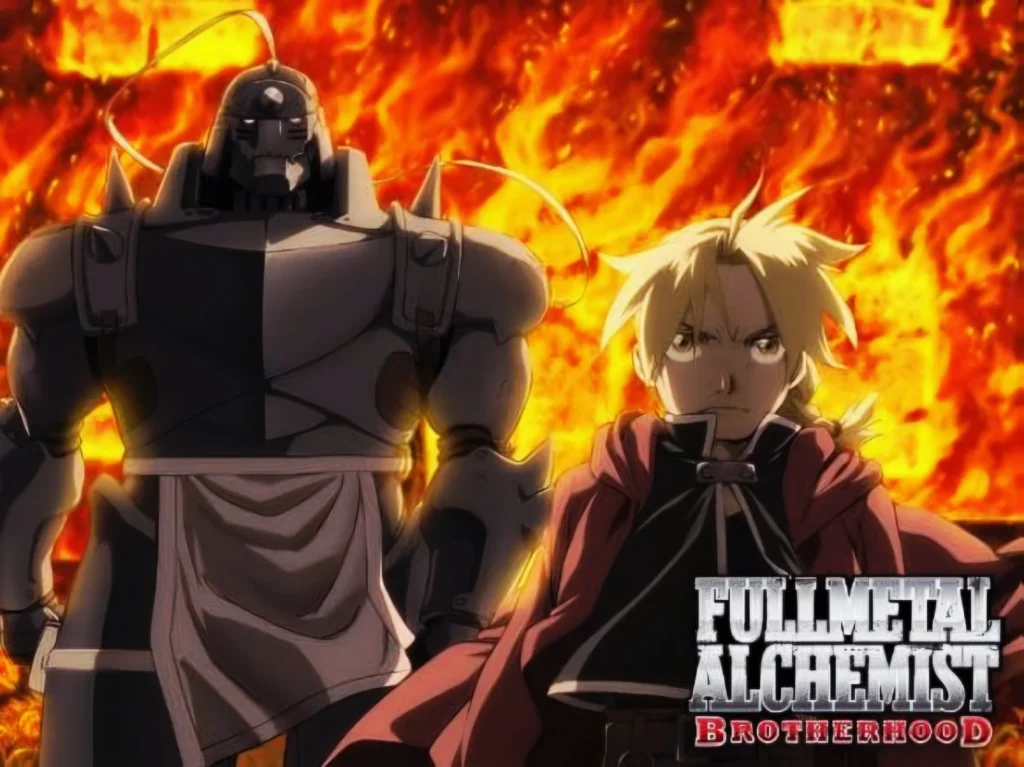
The biggest strength of Fullmetal Alchemist: Brotherhood lies in its faithful adaptation of Hiromu Arakawa’s manga. Unlike the 2003 version, which diverged due to the manga being incomplete at the time, Brotherhood follows the original story from start to finish.
This gives the 2009 series a rare sense of narrative completeness. Every plotline, character arc, and theme feels intentional. Nothing feels rushed at the end, nothing feels unresolved. By the final episode, the journey of Edward and Alphonse Elric feels earned.
The 2003 Fullmetal Alchemist deserves respect here—it laid the emotional foundation and explored darker, more psychological themes. However, Brotherhood refines those ideas and expands them into a grand, cohesive epic.
Characters That Feel Truly Alive
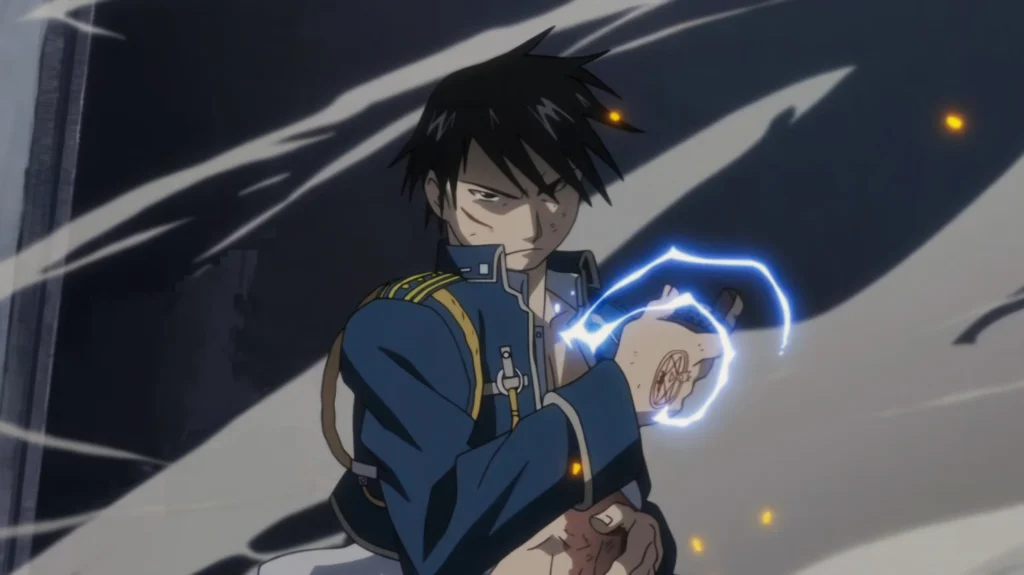
One of the main reasons FMA: Brotherhood feels perfect is its exceptional character writing. There are no useless characters—everyone matters.
- Edward Elric grows from a reckless prodigy into a mature young man who understands sacrifice.
- Alphonse Elric represents innocence, empathy, and moral clarity.
- Roy Mustang evolves beyond revenge into a leader worthy of changing a nation.
- Even antagonists like Scar, Greed, and King Bradley are layered and unforgettable.
The 2003 series focused heavily on Edward’s internal suffering, making the story more tragic. Brotherhood balances that pain with hope, responsibility, and collective action—showing that change is possible when people stand together.
A Perfectly Balanced Theme: Equivalent Exchange

“To obtain, something of equal value must be lost.”
This concept is more than a rule of alchemy—it’s the philosophical backbone of Fullmetal Alchemist: Brotherhood. The series constantly questions:
- What is the true cost of ambition?
- Can human life ever be measured?
- Is power worth sacrificing humanity?
The 2003 anime explored these questions in a more pessimistic way, often suggesting that the world is unfair no matter what you give. Brotherhood, however, takes a more mature stance: equivalent exchange isn’t about equality—it’s about responsibility.
This shift in tone is one reason many fans see Brotherhood as more emotionally fulfilling.
World-Building That Feels Real

Amestris isn’t just a fictional country—it feels like a living world shaped by politics, war, science, and ideology. The Ishvalan genocide, military corruption, and the hidden truth behind the nation’s creation give the story a grounded realism rarely seen in anime.
While the 2003 series kept the world smaller and more intimate, Brotherhood expands it into a global-scale narrative without losing emotional depth. Every location, from Central Command to Xing, serves a purpose.
Villains With Purpose, Not Just Power
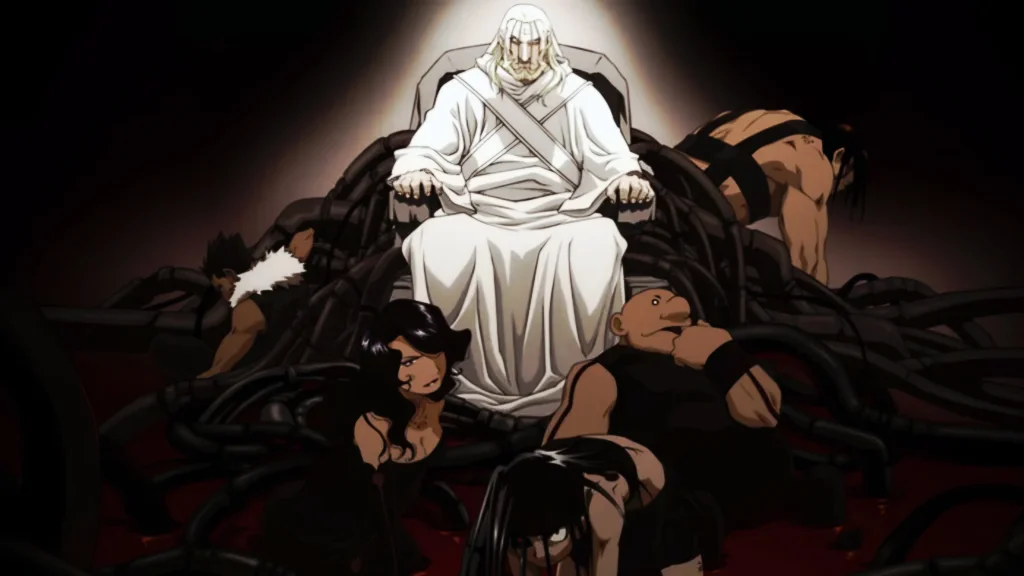
The Homunculi in Brotherhood are not just enemies—they are symbolic representations of human sin and desire. Each one challenges the protagonists in a philosophical way:
- Pride represents arrogance masked as innocence
- Envy reflects self-hatred and jealousy
- Greed questions ownership and freedom
Father, the final antagonist, is not driven by chaos but by emptiness—a desire to become whole without understanding humanity. This makes the final conflict not just physical, but ideological.
Emotional Payoff Done Right
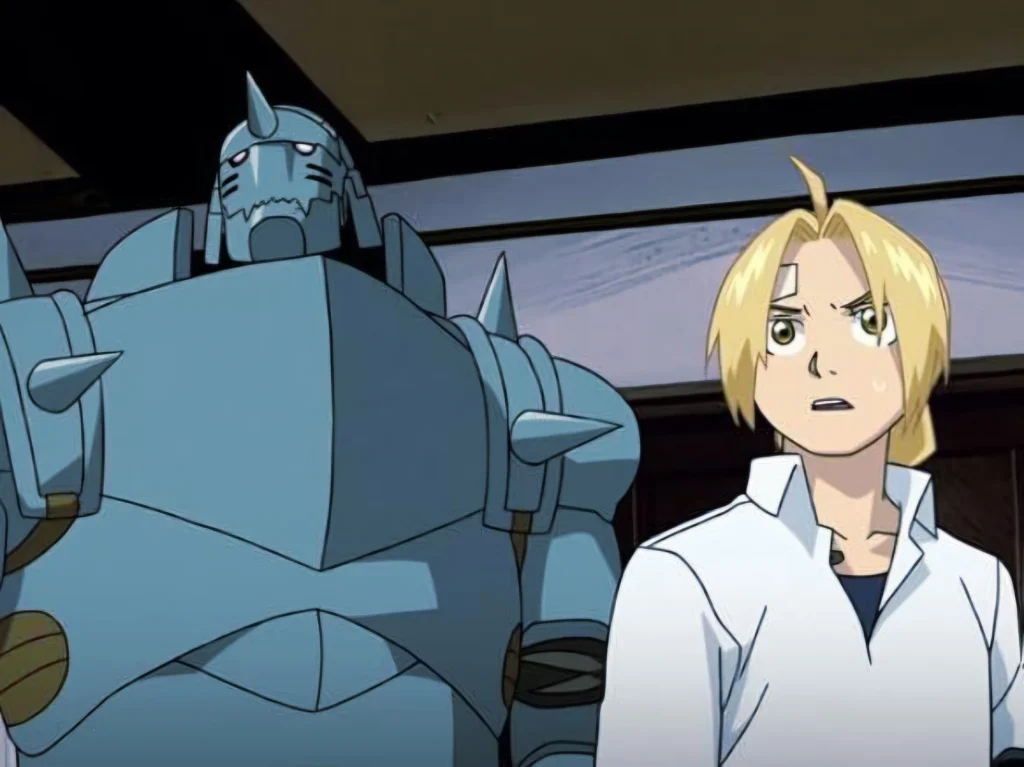
One of the biggest criticisms of anime is weak endings. Fullmetal Alchemist: Brotherhood avoids this completely.
The ending respects every character’s journey. Edward’s final choice—to give up alchemy itself—perfectly completes his arc. It proves that true growth sometimes means letting go of power.
The 2003 ending was bold, tragic, and thought-provoking, but it divided fans. Brotherhood delivers something rarer: closure without compromise.
Music and Animation That Enhance the Story
From its iconic openings like Again and Rain to its emotionally timed background scores, Brotherhood’s music elevates every scene. The animation, while not flashy for its time, focuses on clarity, choreography, and emotional expression.
Every major fight feels meaningful. Every quiet moment breathes.
Why Fullmetal Alchemist: Brotherhood Still Dominates Anime Rankings
Even today, Fullmetal Alchemist: Brotherhood consistently ranks at or near the top of anime lists across platforms. This isn’t nostalgia—it’s quality.
It appeals to:
- New anime viewers
- Hardcore fans
- Philosophical thinkers
- Action lovers
- Emotional storytellers
Few anime can satisfy all these audiences at once.
Final Verdict: A Rare Definition of Perfection
Fullmetal Alchemist: Brotherhood isn’t perfect because it lacks flaws—it’s perfect because every element works together. Story, characters, themes, music, and resolution align with purpose.
The 2003 Fullmetal Alchemist walked so Brotherhood could run. Both deserve respect. But when it comes to delivering a complete, emotionally satisfying, and universally powerful anime experience, Brotherhood stands unmatched.
If anime is storytelling at its finest, then Fullmetal Alchemist: Brotherhood is proof that perfection is possible.