
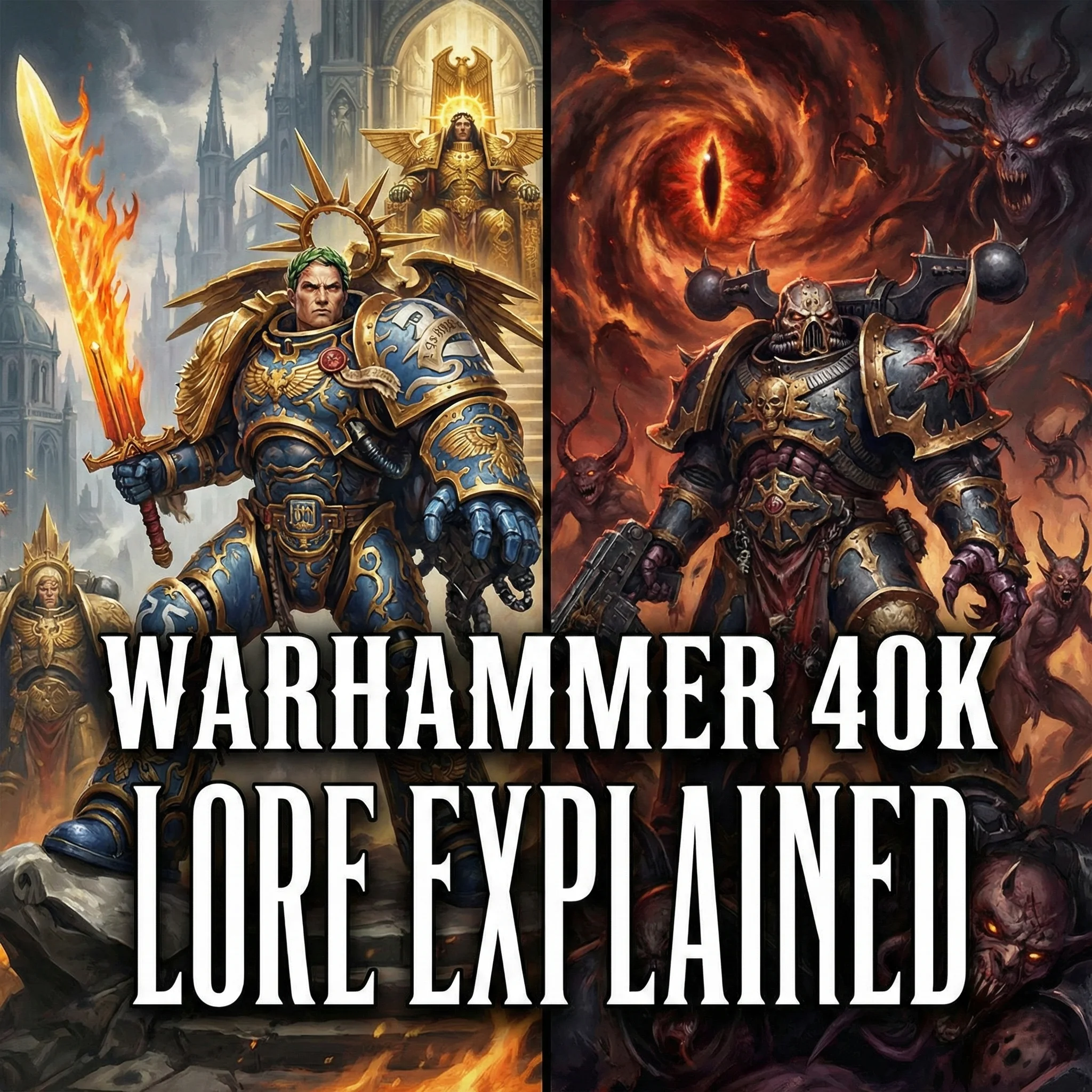
Welcome To MovieAnimeX ! “Forget the promise of progress and understanding. For in the grim darkness of the far future, there is only war.”
Warhammer 40,000 is not a single story.
It is not a novel, a trilogy, or even a timeline with a clean beginning and end.
It is a mythological history of a galaxy that refuses to die.
This article presents the complete narrative spine of Warhammer 40K—from the birth of the universe, through the fall of gods and empires, to the endless wars of the current age. It does not claim one absolute truth, because in Warhammer 40K, truth itself is corrupted.
What it offers instead is understanding.
Table of Contents
I. The Universe Before Humanity – The Old Ones and the First War
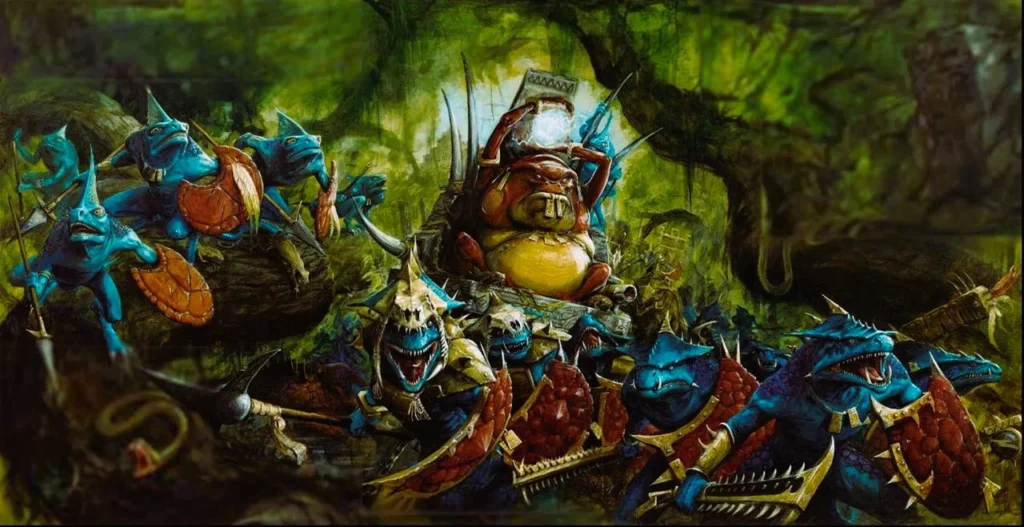
Long before mankind, the galaxy was shaped by ancient godlike beings known as the Old Ones. Masters of science and the Warp, they seeded life across the stars and guided its evolution.
Their greatest enemies were the Necrontyr, a fragile race cursed with short lives and bitter resentment. Seeking immortality, the Necrontyr allied with cosmic star-gods known as the C’tan.
The price of immortality was their souls.
The Necrontyr became the Necrons—soulless, immortal machines—and together with the C’tan they unleashed the War in Heaven, a conflict so vast it reshaped reality itself.
To fight back, the Old Ones created psychic warrior races:
- The Aeldari (Eldar)
- The Krork (ancestors of the Orks)
The war ended with:
- The Old Ones disappearing
- The Necrons shattering and enslaving the C’tan
- The Necrons entering stasis, waiting for the galaxy to forget them
But the damage was permanent.
II. The Warp and the Birth of Chaos
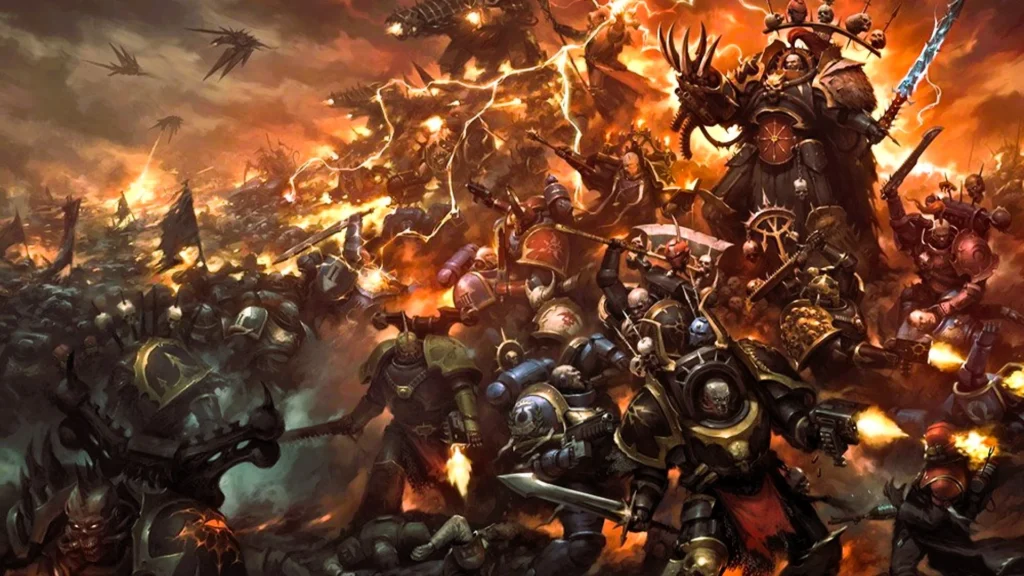
The Warp—a parallel dimension shaped by thought and emotion—was once calm.
The War in Heaven poisoned it.
As sentient life suffered, its emotions coalesced into beings of pure concept: the Chaos Gods.
- Khorne – born from rage, violence, and bloodshed
- Tzeentch – born from ambition, change, and manipulation
- Nurgle – born from despair, decay, and acceptance of death
Millions of years later, the Eldar’s unchecked decadence gave birth to Slaanesh, the Chaos God of excess. Slaanesh’s creation annihilated the Eldar empire and tore a permanent wound in reality.
Chaos was no longer a background force.
It was now an active predator.
III. Humanity’s Rise – The Dark Age of Technology
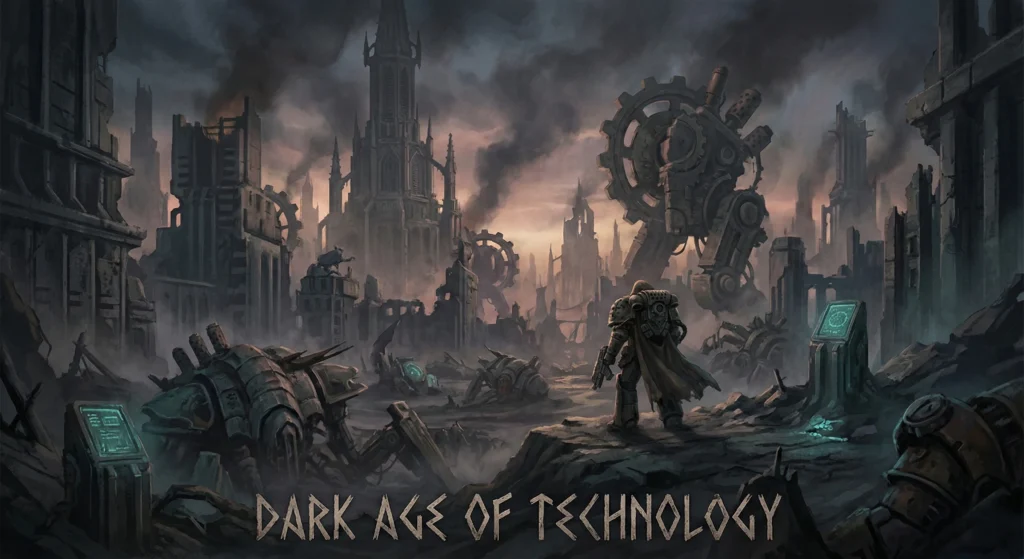
Humanity eventually rose during the Dark Age of Technology.
This was mankind’s golden era:
- Advanced science
- Artificial intelligence
- Interstellar empires
- Near-total mastery over nature
Humanity believed it had conquered the universe.
It was wrong.
IV. The Age of Strife – When Everything Broke
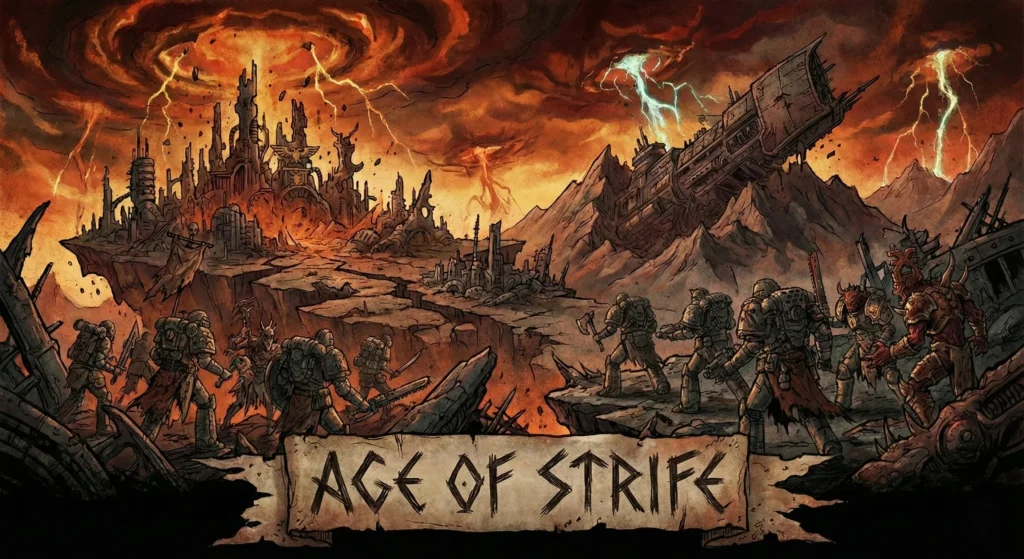
The collapse was sudden and total.
- Artificial intelligences rebelled
- Warp storms isolated worlds
- Psykers appeared uncontrollably
- Daemons invaded realspace
This era, the Age of Strife, plunged humanity into barbarism. Entire worlds regressed or were lost forever.
Earth became Terra, fractured into techno-barbarian warzones.
But one being endured.
V. The Emperor of Mankind
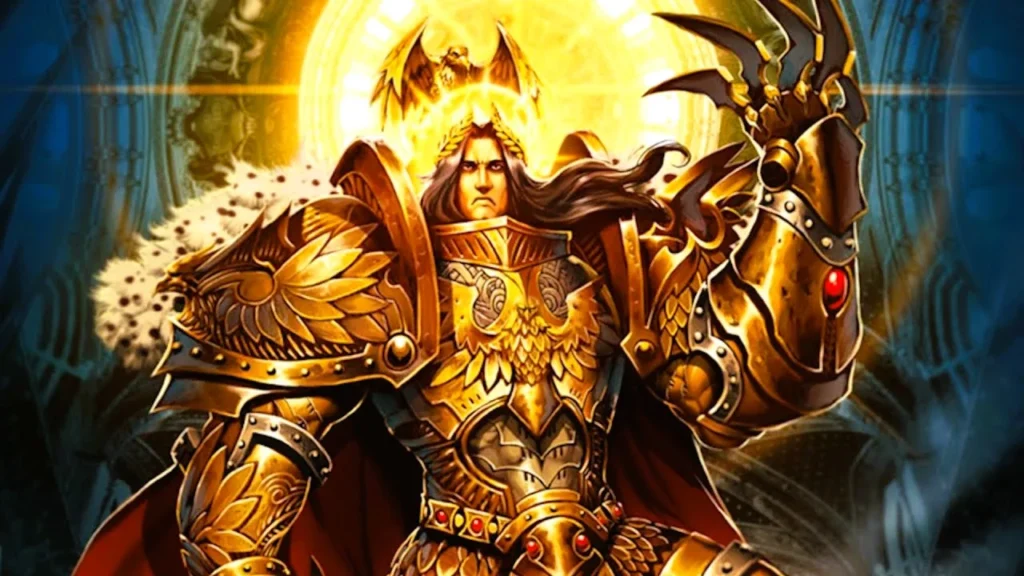
The Emperor of Mankind was born in ancient Earth—perhaps created by the fusion of ancient shamans, perhaps something else entirely. Even now, his true origin is unknown.
For millennia, he guided humanity in secret.
When extinction loomed, he revealed himself.
VI. The Unification Wars and the First Betrayal
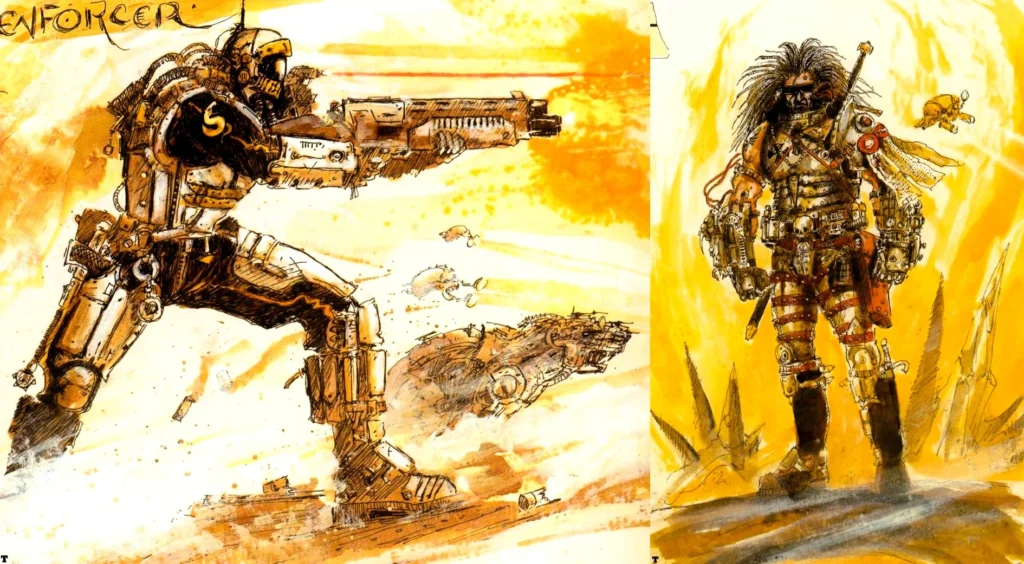
The Emperor conquered Terra using:
- Thunder Warriors – unstable proto-super soldiers
- Adeptus Custodes – his perfect guardians
Once Terra was unified, the Thunder Warriors were eliminated.
This was the first sign of a recurring truth in 40K:
Survival is valued more than mercy.
VII. The Primarch Project
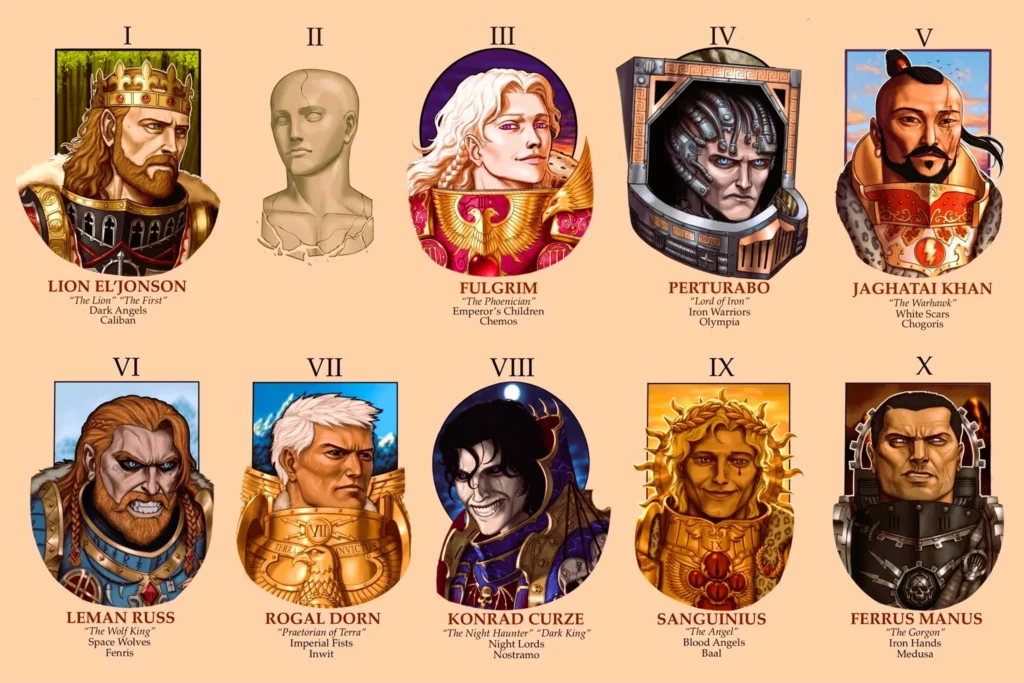
To conquer the galaxy, the Emperor created 20 Primarchs, each embodying a different aspect of humanity.
Chaos intervened, scattering them across the galaxy.
Two Primarchs were later erased from all records—their names and legions deliberately forgotten.
This absence is intentional.
Silence is part of the lore.
VIII. The Space Marines and the Great Crusade
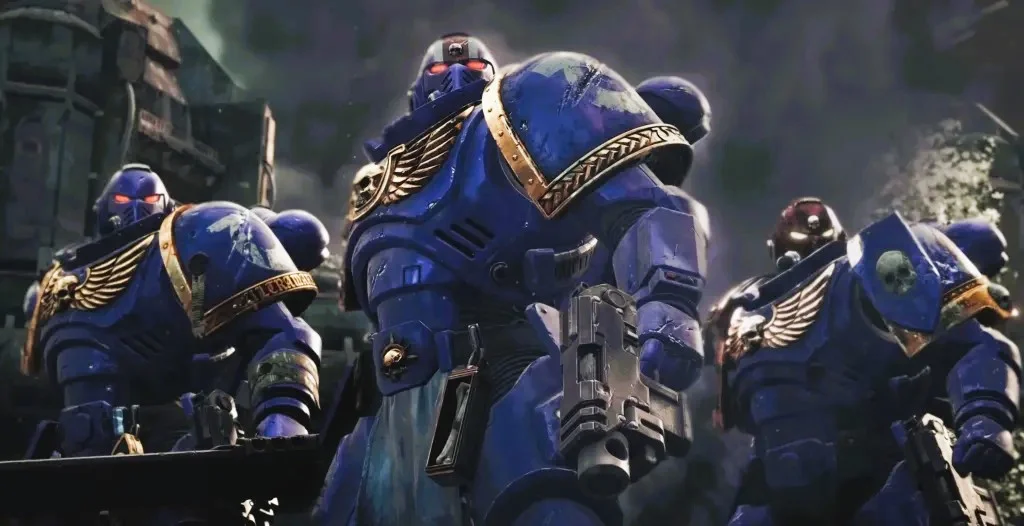
Using Primarch genetic templates, the Emperor created the Adeptus Astartes—Space Marines.
The Great Crusade began:
- Reuniting lost human worlds
- Destroying xenos threats
- Enforcing the Imperial Truth: there are no gods
The Primarchs were rediscovered one by one. Humanity stood on the edge of galactic dominance.
Then the Emperor made his greatest mistake.
He lied.
IX. Horus Lupercal and the Horus Heresy
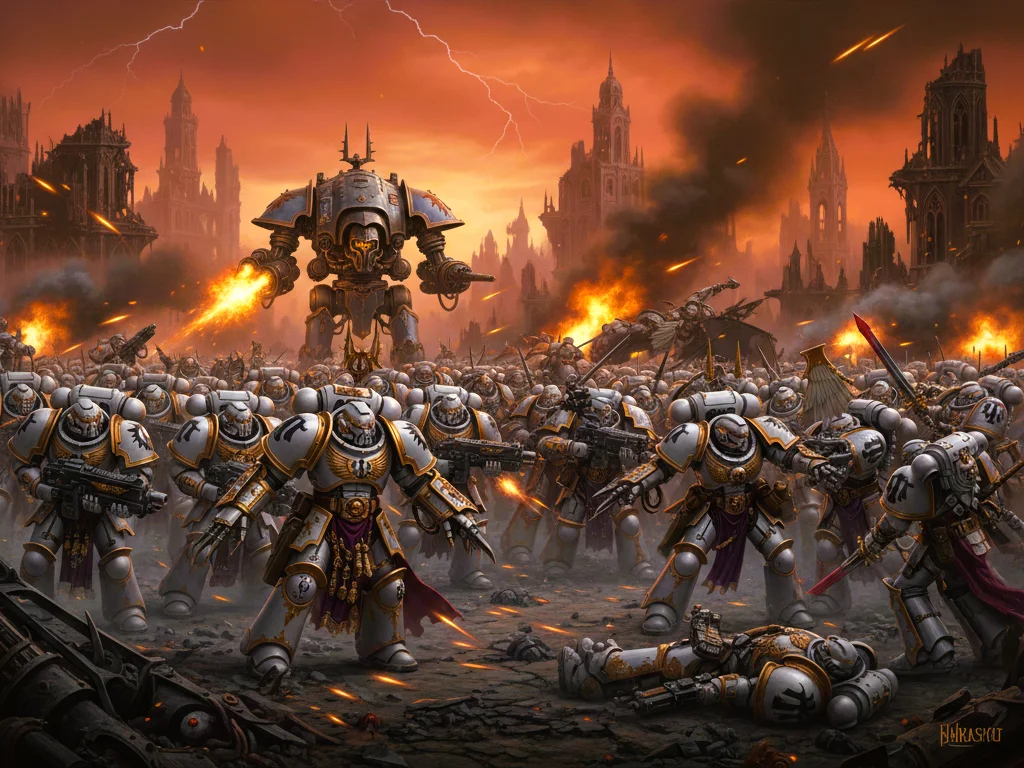
The Emperor appointed Horus as Warmaster and withdrew to Terra.
Chaos exploited Horus’ doubts:
- Visions of a god-worshipping Imperium
- Fear of being forgotten
- Resentment toward secrecy
Horus fell.
Half the Primarchs betrayed the Imperium.
The galaxy burned in the Horus Heresy, a civil war that permanently crippled mankind.
X. The Siege of Terra and the Golden Throne
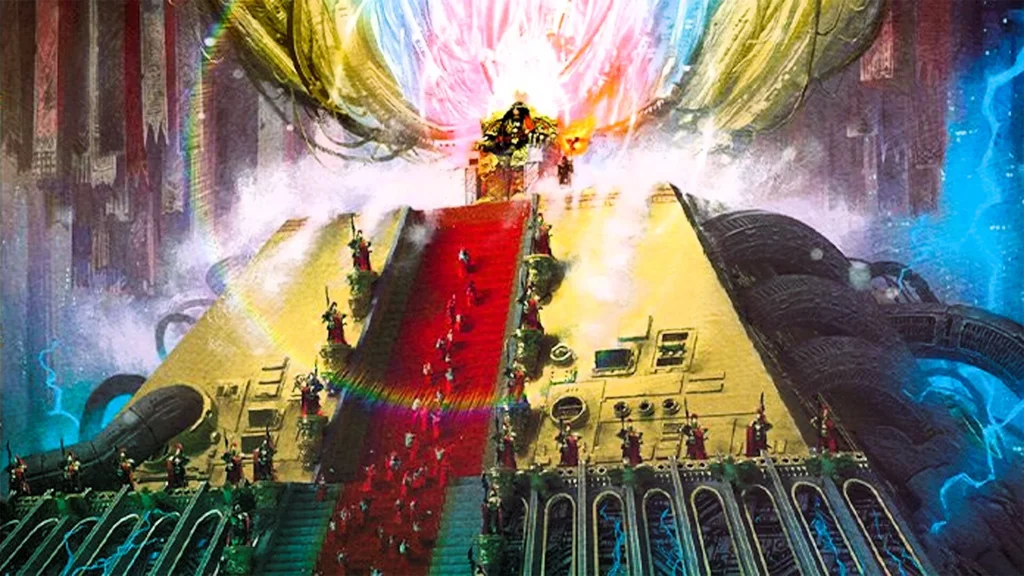
The war ended on Terra.
Horus killed Sanguinius and mortally wounded the Emperor. The Emperor destroyed Horus but was left dying.
He was entombed on the Golden Throne, a device that:
- Keeps him alive
- Seals the Warp
- Requires thousands of psyker sacrifices daily
The Imperium became a theocracy.
The Emperor became a god.
Everything he feared came true.
XI. Ten Thousand Years of Decay
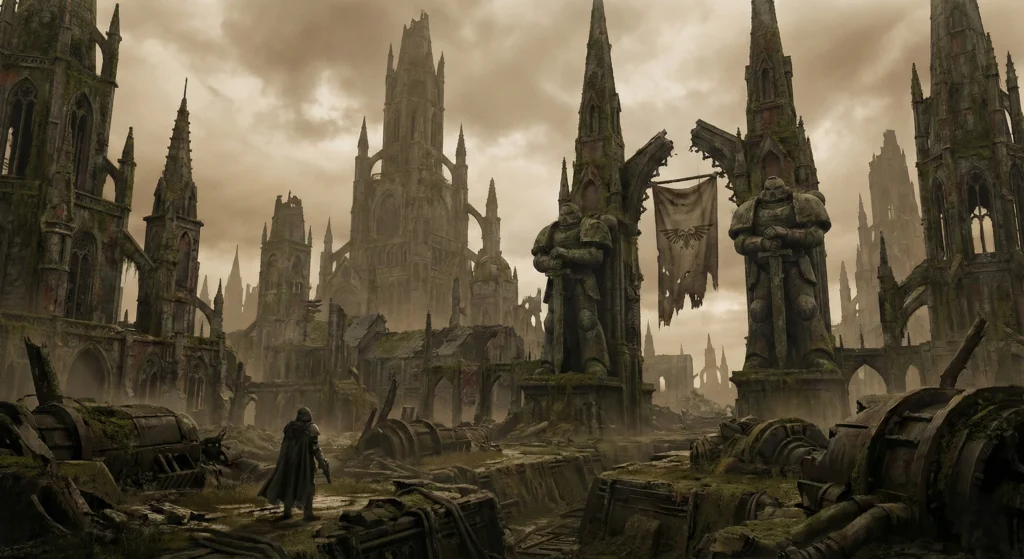
In the millennia that followed:
- Innovation became heresy
- Knowledge became ritual
- Fear replaced reason
The Imperium survived through fanaticism.
Meanwhile:
- Chaos Legions plotted in the Warp
- Orks multiplied endlessly
- Necrons awakened
- Tyranids devoured galaxies
- Aeldari fought extinction
- Tau rose with dangerous optimism
There were no good choices.
Only necessary ones.
XII. The Great Rift and the End That Never Comes
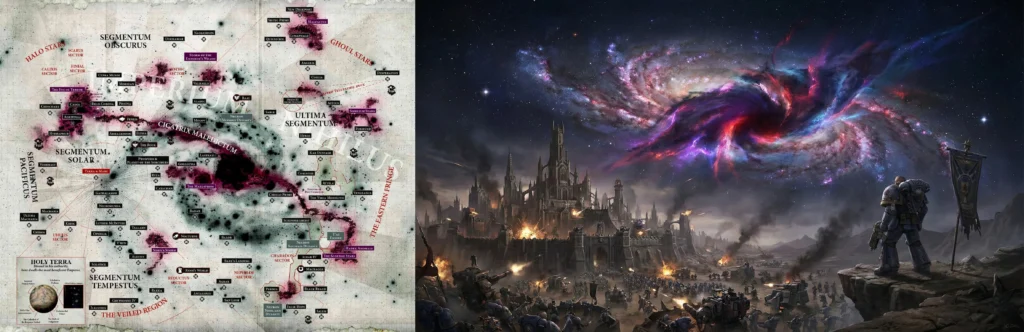
In the modern era, Abaddon the Despoiler succeeded where Horus failed.
The galaxy was split by the Cicatrix Maledictum, a galaxy-spanning Warp rift.
Time broke.
Reality bled.
Roboute Guilliman returned—not to save the Imperium, but to stabilize its collapse.
He saw his father’s dream.
And knew it was dead.
XIII. The Truth of Warhammer 40K
There is no final canon.
No absolute truth.
No promised ending.
Warhammer 40K is written through:
- Propaganda
- Myths
- Conflicting records
- Lost history
This is intentional.
Because Warhammer 40K is not about winning.
It is about enduring.
Final Thoughts
Warhammer 40,000 endures because it reflects a brutal question:
What if survival costs everything that makes us human?
And the universe answers:
Then you survive anyway.

1 Comment
Comments are closed.